
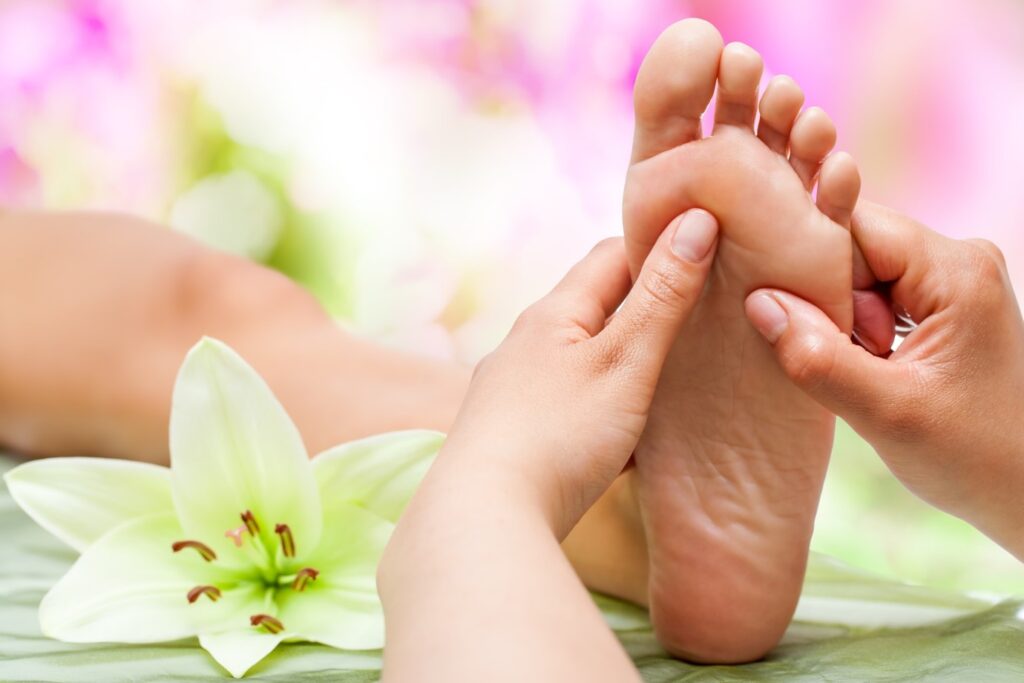
Chinese Medicine also has its massage therapy and Tuina is believed to be one of the world’s oldest massage systems. In addition to Tuina, a massage methodology for the whole body is the massage of the feet known as Reflexology and the Huang Di Nei Jing (黃帝內經), the Yellow Emperor’s Medical Classic devotes a whole chapter to the map of the feet indicating its importance in the family of Chinese Medicine. Interestingly reflexology was very important in ancient Egyptian medicine with art works often depicting its practice.
Tuina, unlike the Ayurvedic sister massages is not lubricated but likewise therapeutic and ranging from medium to strong intensity. Tuina, Chinese 推拏, 推拿literally meaning, Tui = to push, press and Na = to pull, grasp and this explains the technique more accurately. At a first glance, Tuina increases circulation and immunity. The masseur strokes along the muscles and meridians enhancing the flow of Qi and may apply acupressure on certain points. Actions such as rhythmical tapping using the outer side of the hand and a slow grasping technique along the meridians are typical. Sufferers of arthritis, sciatica, rheumatic ailments, gastritis, nausea, migraine, asthma, insomnia or neurological disorders are those to benefit most from such a therapy.
Owing to the vigorous nature of Tuina, it goes without saying that pregnant women should not receive Tuina and osteoporosis patients are advised to contact their medical doctor or TCM practitioner beforehand for advice on the best component of Chinese Medicine for their needs.
To see how Tuina works, we only need to look at its vast vocabulary applicable to its handling therapy:
- Rotating – holding the limb from the tip and rotating it gently
- Twisting – twisting the limb with both palms in opposite directions
- Rubbing – rubbing with a moderate pressure
- Kneading – kneading with the outside of the thumb and hand, as with making bread!
- Pushing – pushing and squeezing the muscle with the fingers
- Qi concentrated single finger pushing – using the thumb in a swaying pushing motion
- Rolling – turning the back of the hand over the patient’s back, causing the whole body to move and Qi to flow!
- Scrubbing – a vigorous scrubbing movement with the palm of the hand
- Shaking – the limb is gently pulled and shaken
- Flicking – with the index finger flicking against the thumb onto the body
- Sinew flicking – pulling up the tendon or muscle and immediately releasing it
- Grasping – lift and squeeze the affected muscle with the thumb and fingers
- Pinching – hold and lift the soft tissues or muscle with the thumb and index or middle finger, push and release
- Tapping– tap with the four fingers held together
I believe Tuina will become more popular and appreciated worldwide especially since the Corona era. People are searching for alternative means to heal and also preventative medicinal practices. Some interesting and valuable research has been carried out regarding Tuina and corona plus other studies are underway regarding insomnia amongst elderly people – who need all their regenerative sleep – and also the handling of sciatica.
https://www.ncbi.nlm.nih.gov/pmc/articles/PMC9009850/
https://www.ncbi.nlm.nih.gov/pmc/articles/PMC8878604/
Shiatsu 指圧 as literally translated from Japanese is shi = fingers and atsu = pressure. The therapy as indicated by its name is originally Japanese but belongs perfectly in the wonderful family of Chinese preventative medicine. It is a preventative treatment, the patient lies comfortably and loosely clothed on a low futon bed and the practitioner exerts pressure not only with fingers, but also elbows and knees, along the meridians regulating “ki”, the Japanese word for qi or life source energy. As does acupuncture or acupressure, shiatsu effectively removes qi imbalances so preventing illness from taking hold. In the case of ailments, it acts to remove those symptoms.
Shiatsu restores the balance of energy and revitalises the body in case of lacking ki, helping the body to repair itself. It is considered a complementary medicine in many cases applied together with other medical practices, especially if a health disorder has taken hold. Its therapeutic benefits include:
Shiatsu and pain
Pain, controlled by the nervous system, is a signal that something is wrong with our body. When pain becomes chronic, it greatly affects the quality of life of the person suffering. Here Shiatsu considers the physical and emotional suffering of the person and relieves most recent or chronic pain phenomena.
Examples of pain on which Shiatsu acts:
- Sports injuries
- Back pain: lumbago, sciatica
- Musculoskeletal disorders: muscle tension, cramps, tendonitis
- Migraines, neuralgia
- Gynaecological and digestive pain
- Pain associated with certain pathologies: cancer, fibromyalgia, multiple sclerosis
Shiatsu and depression
Depression is an imbalance of the nervous system and an exhaustion of resources, which leads to many disorders such as sadness, withdrawal, sleep disorders and fear. “Shiatsu proposes a comprehensive treatment of the person on several levels: physiological, chemical, mechanical and psycho-emotional”.
Chinese medicine understands that depression and associated emotional disorders can be linked to the organic emptiness of one or more energy organs. After identifying the person’s energetic imbalances, the practitioner works on the meridian of the associated organ that is in deficit. For example:
- Heart for lack of joy.
- Pericardium for lack of external relationship.
- Liver for lack of enthusiasm, frustration.
- Lung for sadness and lack of vision in the future.
- Spleen for anxiety and ruminations – obsessively overthinking.
- Kidney for fear and lack of willpower
Shiatsu and fatigue
Fatigue can be seasonal, occur after an operation or be linked to depression. Fatigue is a complete lack of ki or energy. This can be diagnosed by checking the appearance of the tongue and most likely the tongue will be pale with a thin layer of white. The indication is a depletion of jing or essence in the kidney which we know to be linked to the source of life, a dysfunction of the lung known to be the breath of life – where qi enters the body plus the spleen which transforms food nutrients and is sometimes referred to as the “mother of the body”.
Shiatsu is well known to be effective in the treatment of burnout. By acting on the energetic imbalances that cause fatigue, Shiatsu will raise the energy of the person. The practitioner will give advice such as letting go of events, correcting the diet, exercising. However it is important to be aware that fatigue is an alarm signal in many pathologies and if it persists after a few Shiatsu sessions, medical advice should be sought.
Shiatsu and heavy legs
The feeling of heaviness, tingling in the legs or swollen ankles at the end of the day are often the effects of poor circulation. Shiatsu can alleviate the problem by boosting stagnant energy, decongesting the tissues to boost circulation and the lymphatic system. Maybe the practioner will suggest self-massages, “key points” to stimulate oneself – this is known as ‘auto shiatsu’.
Shiatsu and stress
Stress or overwork will disorganize the blood circulation and the energetic balance by raising the blood pressure and by discharging the stress hormones – adrenaline and cortisol – in large quantities and continuously. Shiatsu, by re-establishing the good energy circulation, by calming the mind, will take care of the symptoms linked to stress: nervous disturbances, fatigue, anger, fear, blocked breathing, palpitations, reactive hypertension. A Shiatsu practitioner will have a role of educator, of advice to help prevent or deal with burnout.
Shiatsu can be performed in repeated sessions until the symptoms are removed.
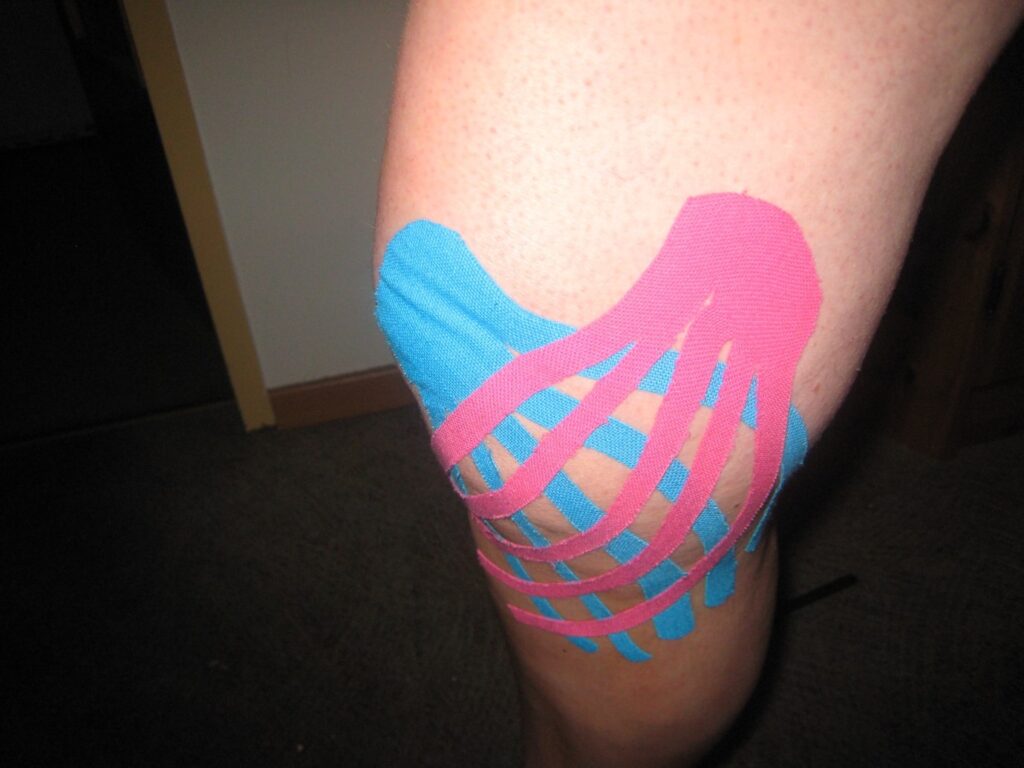
Kinesiotaping, another Japanese invention, which is highly effective treating swelling and pain from sport injuries – speaking from personal experience – is also based on shiatsu. The coloured tapes are attached to the injured part of your body along the meridians and after walking with these tapes, you find after a week or two, all the swelling and pain has gone! No interventions, just external application of taping. I have recommended this to so many people!
Reflexology is a massage therapy applied to the feet, the foot map displaying all the organs of the body is likely familiar even if you are not a Chinese medicine geek! The idea is that by touch, you can heal the corresponding organs. Studies on reflexology and its benefits are scarce but for sure it is therapeutic to have a foot massage and benefits are not to be excluded.
https://pubmed.ncbi.nlm.nih.gov/25892354/
Healthline reports feedback from patients on the benefits of reflexology as follows: it boosts the immune system, alleviates back problems, corrects hormonal imbalances, boosts fertility, improves digestion, clears sinus problems, eases arthritis pain and probably the most remarkable, it treats nerve problems and numbness caused by cancer drugs (peripheral neuropathy.)
Since the Egyptians adopted it, I do not believe we can disclaim it as an adapted new theory by Western practioners who gave it a title. On the contrary, there are three yin meridians: Liver, Spleen and Kidney which start at the feet and three yang meridians: Stomach, Gallbladder and Bladder ending at the feet. Precisely these points of the appropriate meridian located on the feet are the useful ones to acupressure during a reflexology session.
The so-called zone system may or may not lack precision. Attending a Chinese lady for Reflexology, I noted she applied pressure on the actual Chinese Medicine Meridian acupressure points and I was even discussing with her as she treated me, hence she became even more helpful in our discussion! She pressed LV3 (Taichung – Liver 3), GB43 (Xiaxi – Gallbladder 43) reached up as far as that sensitive (!) but strategic juncture point SP6 (Sanyinjiao – Spleen 6 ). It is true the organs have been depicted as zones mapped onto our feet, hands and ears and whereas these zones can be therapeutically applied, I feel it makes much more sense to massage the actual acupuncture points according to the Chinese Medicine meridians for more precise treatment.
An extremely beneficial practice and component of Chinese medicine is Cupping, still widely practiced in Turkey known as hacamat and Egypt, al hijama (الحجامة ) and Iran, hajamat (حجامت). I myself occasionally use the practice so am very convinced by its benefits. For me, it was a case of ‘computer shoulders and upper back’ and some serious qi stagnation! More than 8 hours at work on my laptop is no problem now I know the relief by taking a cupping session!
Cupping is the application of inverted glass cups along the meridians and by a process of suction they stimulate the qi flow beneath the surface. Acupuncture as we know accesses the meridians by needling but cupping is applied to the surface of the skin. After sanitising the skin, the heated cups are placed inversely on the skin. Some practioners leave the cups for the suction process and others glide the cups after a couple of minutes to another location. The sensation for the patient is one of relief, relaxation and it is definitely a pleasant experience.
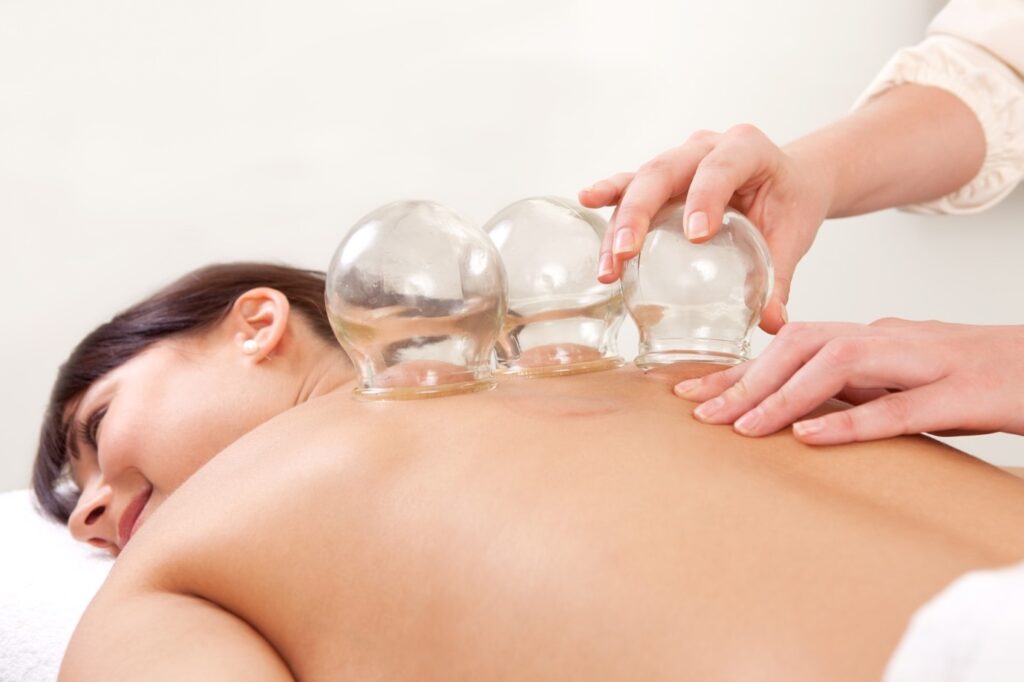
For those who are not familiar with the process, it will maybe shock them to find circular marks left behind, ranging from pink to deep mauve in colour. These pass so if you are not going to expose that part of your body on any occasion, the marks simply lighten and pass. There is a reason for the colour and it’s a therapeutic one!
The process to describe it is also interesting. During the suction of the skin, some tiny blood capillaries close to the surface break and the body responds as if a bruise was to form. More importantly the suction causes the gap between skin layers to increase allowing more dead cellular debris and toxins to gather which will be swept away by the lymphatic system which enables the skin to return to its natural colour.
People with good health, little stress, good sleep, good blood flow and plenty of energy will find the cupping mark to be a light pink but those with stress, ranging from tired to exhausted with stagnated qi and blood can experience a deep mauve cupping mark but an immediate and considerable feeling of relief after cupping. I recommend the procedure as a supplement to acupuncture!
This is dry cupping, but there is also wet cupping which involves blood letting with negative pressure or suction. It is just important to find an experienced and qualified practitioner to avoid danger of infection. This is extremely effective in extracting toxins.
“ The high pressure from suction leads to increased blood volume, increased capillary filtration rate, and the expulsion of filtered and interstitial fluid in the area. Filtered fluid collected contains disease-related and disease-causing substances as well as prostaglandins and inflammatory mediators.”