
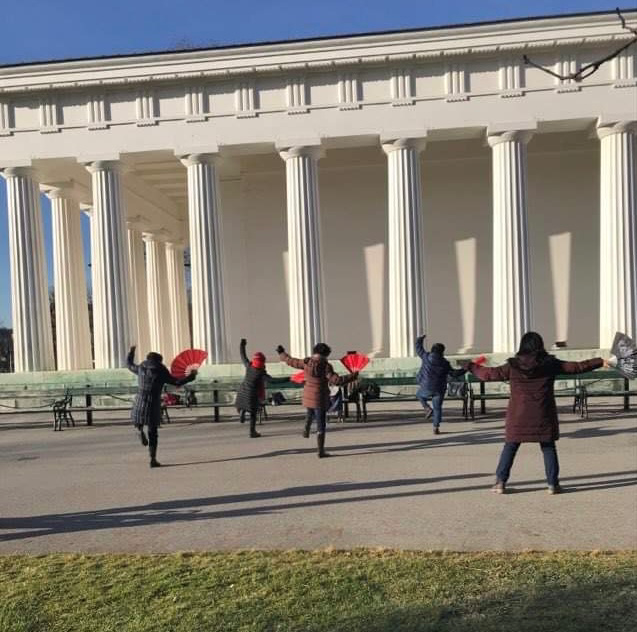
Due to linguistic differences between Mandarin and English, there may be mistaken definitions when it comes to defining Tai Chi – sometimes transliterated as Taiji. Important to know is that the practice encompasses philosophy, martial arts and health benefits.
Looking at the meaning from a philosophical angle gives us an accurate definition of the words Tai Chi sometimes written as Taiji. Chinese philosophy considers the original state of nothingness to be “wuji” and the opposite of this to be “tai”. When a movement shifts from “wuji” it enters “tai” resulting in the polarity concept of yin/yang. We see this clearly with the Conception Vessel (Yin) and Governing Vessel (Yang) both central components of the practice of Tai Chi.
So, “balancing two extremes”could be a more meaningful translation, balancing yin and yang.
The word “Chi” is not the same as the “chi” as in qi gong. The “chi” 極from tai chi is used in Chinese to mean ultimate or highest and the “qi” we refer to in qi gong is “qi” 氣 meaning energy or life energy which flows through our meridians (energy channels).
There are considerable health benefits from practising tai chi, although its tradition is rooted in martial arts. Numerous research studies indicate improvements in mobility, physical fitness, immunity, mental health plus less impact from chronic diseases such as cancer, heart failure, diabetes. The benefits are beyond those reaped from walking or working out at the fitness studio.
https://pubmed.ncbi.nlm.nih.gov/20594090/
To absorb some of the history and philosophy, let’s see how tai chi evolved.
Bodhidharma, known to be from Persia or India brought Buddhism to China, Japan and Korea and lived several years in the Shaolin Monastery where he found the monks to be weak in body and mind and therefore encouraged physical exercise. His writings and teachings in the 5th century made him an influencer of his time. On the basis of Bodhidharma’s yoga like exercises, 18 monks together created Shao-Li Chuan which was the foundation of all Qigong, Tai Chi Chuan and other martial arts. Until the 14th century movements linked to nature were added and perfected and the practice enjoyed approval from the Emperor.
The greatest influence on the development of Tai Chi was given by Laozi or Lao Tzu or Lao Tseu (as sometimes his name is transcribed) the founder of Taoism (The Way) around 500 BC. He was a contemporary of Confucius. The collection of essays in his work, the Tao Te Chin is the whole philosophy of Taoism, how all living creatures should be in harmony with the universe. It refers to the balancing of yin and yang.
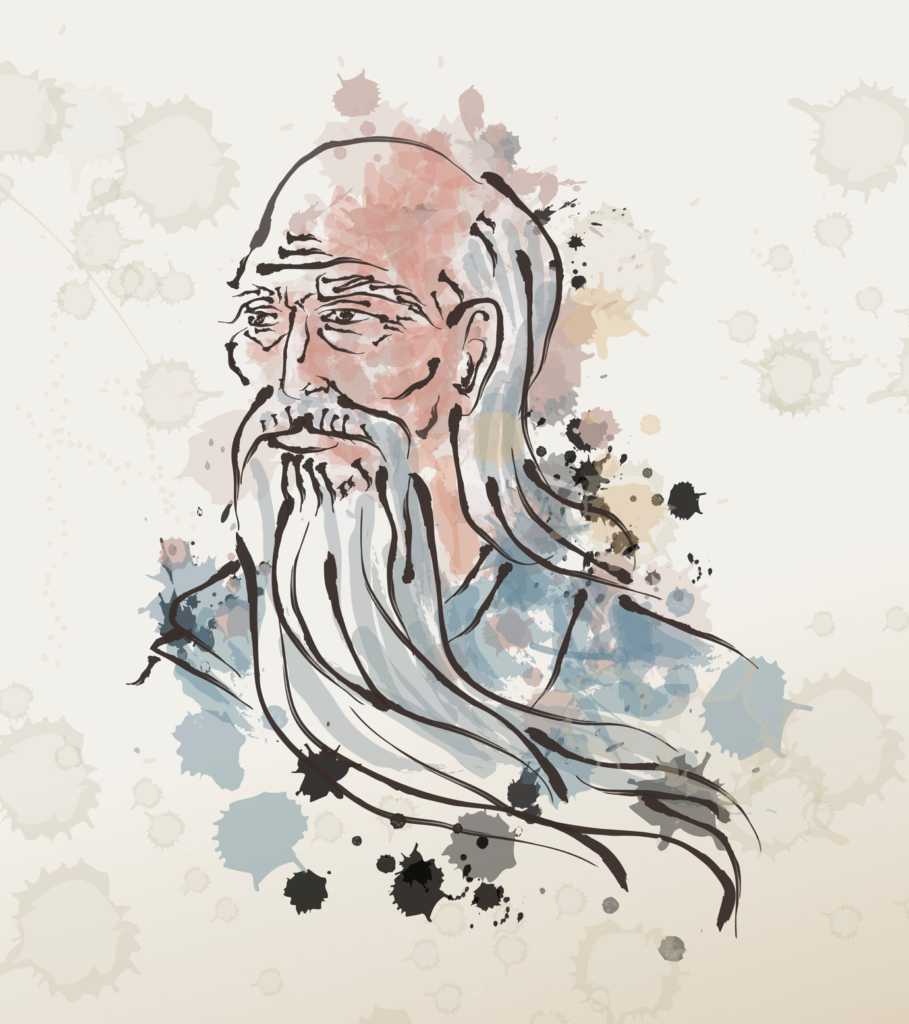
Styles of Tai Chi
Historically there are five styles of Tai chi stemming from different eras. Each has a unique set of methods and principles, lineage and date of origin.
As you see, they are named after their founders:
Chen Wang Ting – Chen Style, which began between 1580 and 1660
Yang Lu Chan, Yang Style, which began between 1799 and 1872
Wu Yu Xiang, Wu (Hao) style, which began between 1812 and 1880
Wu Quan Yu, Wu style, which began between 1834 and 1902
Sun Lu Tang, Sun style, which began between 1861 and 1932
I myself practice the Yang Style, learnt from my Tai Chi teacher who was taught by Master Chu King Hung, a direct descendent from Yang Lu Chan!
Some of these forms of Tai Chi focus on health, while others on competition or self defence.
The increasing trend is towards health. Just ask an instructor of a tai chi class which style they are practicing in order to know if that coincides with your expectations.
We can conclude that the concepts are rooted in Chinese history, primarily from Taoism, the most important philosophy together with the philosophy of Confucianism and Buddhism.
Zhang Sanfeng, a Taoist monk living in the 12th century is considered the founder of Tai Chi. Some stories say that Zhang Sanfeng left his monastery, became a hermit and created a form of combat based on gentleness.
A famous story of Zhang Sanfeng’s observance of a fight between a crane and a snake depicts the origins of Tai Chi. Zhang was impressed by the snake’s composure as the bird attacked and the snake twisted remaining unharmed and finally launched its attack. He used this imagery to form a tai chi sequence of gentle combat.
“In every movement, every part of the body should be light, agile and connected. The postures should be without pauses. Movement should be rooted in the feet, released through the legs, directed through the waist and expressed through the fingers. Substantial and insubstantial movements should be clearly differentiated.” – Sanfeng
Because of the gentle nature of Tai Chi, it is suitable for people of all ages and all degrees of fitness.
Similar to Pranayama in Ayurveda, Tai Chi breathing exercises are performed to maximise oxygen intake and thereby send messages to your parasympathetic nervous system which detaches you from the unpleasant symptoms and stress related to the sympathetic nervous system.
A detachment from the symptoms which are causing the complaint is a wonder of the nervous system which enables the blockages to to be lifted and recovery to follow. We communicate with the nervous system through our breathing and appropriate breathing which will ensure our nervous system functions correctly.
A general principle during Tai Chi movements you will learn is that when moving your hands apart, you inhale and when bringing your hands back together, you exhale.
- Open your arms and inhale qi, close your arms and deliver qi.
The same applies with vertical movements.
- Move your hands up, you inhale and are receiving and storing qi and move your hands down, exhale and deliver qi.
Focus on the qi entering your body and flowing through the meridians, bringing energy to all your bodily functions, focus on the qi you deliver by exhaling.
Throughout the movements, aim for long, continuous breaths through the nose. Breathing should not stop and the breath should not be held.
By taking a deep abdominal breath you are soothing your inner organs. You can be more aware of this by placing your hands on your belly, you will feel your lower abdomen rise as you inhale and sink back as you exhale. This can be performed lying or standing, breathing to enhance your wellbeing. Inhale and you are bringing in life energy into your body and exhale to deliver energy.
I refer to Tai Chi here in its health context as this is the aim of this project. However, an interesting, by the way, fact that those who practice Tai Chi as a martial art will know strikes are accompanied by an exhale despite the arms being open. Logically you would not attack, inhaling at the same time!
Tai Chi belongs to the larger family of Qigong 氣功. As already mentioned, in Qigong, the qi refers to life force energy and gong means effort or discipline. In other words to have effective, plentiful and flowing qi which regenerates us and paves the way for healing us, we should practice to take care of it.
Tai chi can be defined as a part of Qigong, but Qigong is not a part of Tai Chi, they are interrelated but Qigong is the mother of Tai Chi. There are a multitude of Qigong movements mainly performed from a sitting or standing position right through to some vigorous movements. People use Qigong to relax but most of all to heal and connect their body and mind to the flow of qi – energy. The movements of Qigong and Tai Chi are both smooth, gentle and harmonious.
Qigong’s range of movements is wider than that of Tai Chi although, unlike Tai Chi, it has no martial aspect. Tai Chi’s origins are of a martial nature although the health and wellness perspective is considerable and becoming the dominant feature responding to people’s needs.
The martial nature of Tai Chi is displayed in the complexity of its movements which follow a certain “choreography”, Qigong’s movements are less complex and more flexible to variation.
Qigong’s movements can be adapted to the health needs of those participating. Qigong addresses the 5 elements and provides training sequences to each of these elements. Chinese Medicine refers to the 5 elements: water, wood, fire, earth and metal and for comparison, Ayurveda: ether, air, fire, water and earth which we’ll look at later.
Our constitution is defined according to the presence of the dominant element. The elements not only possess characteristics and determine the personality and health tendencies of an individual but they have their own life cycle. For example we are born with a predominant water element and as elderly beings we are predominantly metal. From endurance- Water we experience growth – Wood, splendour- Fire, fruit – Earth, and quality – Metal.
Our individual organs are also related to certain elements, likewise the seasons and even the time of day, so the concept is complex. Similarly present in Ayurveda, a subject I will enlarge on as an individual topic. Enough here to note a small child will be Kapha and elderly beings predominantly Vata.
Despite being of martial origin, the Tai Chi movements are very gentle, harmonious and therapeutic. Being a lover of dance, I can definitely appreciate the harmonious “choreography” of Tai Chi!
During Qigong or Tai Chi exercises, much focus is placed on the DAN TIAN. Whenever reference is simply made to ‘the’ Dan Tian, it refers to the abdominal lower Dan Tian as its location is lower than the others and it contains our origin source of energy, our inherited source of energy, known as Jing.
In fact, there are three Dan Tians or energy centres in Chinese Medicine comparable to the chakra energy centres in Ayurveda. The Dan Tians differ from the chakras, as in Chinese medicine there are three, one in the abdomen, one in the chest and one in the head. It is a place where our life force energy “Qi” is stored and built although the qi is differently named according to its location.
Although each of the three Dantians have separate terms for energy, it is all qi, just subdivided to enable us to understand its applicable origin and function. When energy is full at the lower DanTian, it flows over to the other two Dan Tians, in fact in martial arts, attention is only given to the Dan Tian in the lower abdomen as this is considered the source of balance and power.
The Lower Dan Tian – Xià Dāntián – 下丹田
Some refer to the abdominal Dan Tian as the navel although technically it is located slightly below the navel. It is often referred to a well of human energy, a second brain.
The Dan Tian (丹田, literally: “the elixir of life”) and the lower Dan Tian (Xià Dāntián – 下丹田 is the residence of our original, inherited qi or essence. This is the original energy which gave us life and it is referred to as Jing. When Jing is exhausted, we pass away. However, we can enhance the quality of Jing by practicing Qigong, Tai chi, Yoga, Meditation. If we can remain healthy and reduce stress levels, our Jing will be of a better quality which in turn ensures better health. So, we can live our life in a healthier, more fulfilled and happier way, more completely.
Let’s look at the function of Dan Tian. Specifically the abdomen consists of fat, muscle, fascia and tendons, this is all conductive material which enables energy or qi to be stored.
The Dan Tian is also a neural network and so can become energised through Meditation and Tai Chi or Qigong exercises and with practice you can condition the Dan Tian to contain an increased capacity of energy.
Your body can use the extra or improved energy to heal both physiologically and emotionally – on an emotional basis, you have better energy and attract like minded people, enjoy life more, are more accepting of difficult circumstances, less affected by negative situations and negative people.
In Chinese Medicine, we can build energy in the Lower Dan Tian and this abundance of energy enables us to heal. The surplus energy passes in an upwardly direction to the Middle Dan Tian (located in the solar plexus area of the diaphragm and finally the Upper Dan Tian (located in the head at area of the pineal gland).
The Middle Dan Tian (Zhōng Dāntián – 中丹田)
The excess energy from the Lower Dan Tian flows up to the Middle Dan Tian or middle energy centre which manages our organs, blood and respiration. The energy of the middle Dan Tian is named Qi, as the normal definition of energy in Chinese Medicine. The principal source of the Middle Dan Tian’s qi source is from the air we breathe in and from the food and drink we consume.
We can conclude that it makes sense to eat healthily giving our body a plentiful supply of nutrients. If the food is of poor quality, the body struggles to extract sufficient nutrients. There is a meagre reserve for repairing tissues or fighting sickness. Just like a “hungry” bank account which barely covers the rent and basic food or an abundant bank account which enables you to live well. As we now understand, the lower and middle energy centres are active and these two Dan Tians are productive in cultivating our energy with a comfortable reserve.
The Upper Dan Tian (Shàng Dāntián, 上丹田)
The energy of the upper Dantian is known as Shen – also translated as spirit. It manifests itself as awareness, memory, intellect, intention, decision making, planning, activation of the mind. The Shen energy is more subtle than either Jing or Qi . We replenish both Jing and Qi in order that enough surplus can flow to Shen. When Shen is abundant, our thoughts are clear and constructive, we sense a wave of focussed creativity, energy fills our head to the top point of the head, pineal gland and third eye.
The upper Dan Tian located in the head, is not productive, on the contrary it thrives on a certain “emptiness,” liberation from fog, confusion, procrastination and scattered thoughts. It flourishes on clearness of mind, focus, enjoyment and productivity. Once the health needs have been satisfied by the Middle DanTian, energy in the mind flourishes! You no longer handle problems but you grasp opportunities, true crisis management. Alone the Chinese word for ‘crisis’ ‘危机 tells us:
“When written in Chinese, the word ‘crisis’ is composed of two characters. One represents danger and the other represents opportunity. “ John F. Kennedy
Languages always teach us the philosophy of the people.
All three Dan Tians are connected via the spinal cord and communicate constantly.
In Qigong we pay great attention to the 8 extra meridians which are connected to the major 12 meridians in Chinese Medicine. These 8 act as reservoirs for the Dan Tians and contain Jing or essence. The 12 meridians, each one allocated to an organ, for example, the liver meridian, the lung meridian and so on. Let’s define the 12 as “rivers of qi” flowing though our bodies on certain routes or meridians I’ll cover later on the topic of acupressure.
For the purpose of Qigong, it suffices to be aware of their existence but of far greater significance are the 8 reservoirs (the 8 extraordinary meridians), which absorb surplus energy if the 12 “rivers of qi” become overfilled with energy. In order to be healthy, qi must constantly flow and avoid stagnation, also flow in the natural direction not become ‘rebellious’ (flowing in the contrary direction), so guaranteeing our good health.
Of the eight extraordinary energy flow channels or meridians, there are two of particular importance when practising Qigong and these are:
- The Conception Vessel (Yin)
- The Governing Vessel (Yang)
Here we learn to balance the Yin and Yang in our bodies.
Both vessels are linked with each other and form a loop upwardly along the central line of the abdomen front and back down the spinal cord.
The best indication of a strong and healthy body is when these two vessels are full of freely flowing qi. This loop of the two vessels, otherwise referred to as the “small heavenly circle” can be maintained in a healthy state by maintaining an abundance of Jing in the Lower Dantian, remembering that surplus energy from the Lower Dan Tian feeds the Middle and subsequently the Upper Dan Tian. For this reason we focus deeply on the Lower Dantian, especially when warming up for Qigong practice.
The most important point about breathing is that you inhale and exhale deeply a few times before initiating any movement. Your focus is in your belly or more precisely, the location of the Lower Dantian, where your original qi or jing resides. Initiate your breathing, and then begin the coordinated movements. Placing your hands over your Lower Dantian (men: left over right, ladies: right over left) start abdominal deep breathing, slowly inhaling and exhaling.
In Chinese Medicine, there are 5 pillars of medicine:
- Acupuncture (including acupressure)
- Moxibustion
- Tuina
- Chinese Herbal Medicine
- Qigong (including Tai Chi Chuan).
Eastern traditions have very different spiritual origins, also the field of medicine reaches beyond science and knowledge. The element of energy is profound in both Chinese Medicine and Ayurveda as is the aspect of spirit. Astrology (Chinese) and for Ayurveda (Vedic) also play a role in these ancient medicines.
Deep breathing techniques have always been an inherent part of Eastern traditions which have a broader medical scope than their western counterpart.
Pranayama of Ayurveda has a large spectrum of breathing techniques and the breathing techniques in Chinese Medicine adopted in Tai Chi and Qigong are of a similar principle even if the range is less extensive with a smaller repertoire.
As a whole, deep breathing techniques are patterns of inhaling, exhaling and possibly holding the breath for a predetermined length of time and specific number of repetitions. Deep breathing calms our nervous system, reduces anxiety and increases stamina whether walking up an extremely steep hill or working out at the fitness centre.
The breathing techniques have been practiced for the last 5,000 years so are not a new discovery but delving into a wonder of ancient knowledge, explaining why it really does work.
Generally in our daily life, our body receives messages and according to our breath pattern it knows whether it should react stressed or relaxed. Next time you run for the tram or just push yourself to climb that very steep hill, your body will have constricted your muscles and you may start to pant or even sweat especially if it’s in the middle of summer. Just take a couple of deep, slow, smooth breaths and your body will receive a different message enabling you to feel relaxation, lack of stress and you seemingly miraculously find greater stamina!
The messenger from brain to body – to the navel – and vice versa is the vagus nerve. The body reacts physically to stress or strain, the brain reacts to this message and provokes certain bodily reactions for stress management.
The vagus nerve is responsible for our parasympathetic nervous system. Deep breathing has the power to balance the stressed “fight or flight” sympathetic and the parasympathetic relaxed “rest and digest” parts of the nervous system.
In other words, taking a deep breath enables us to actively take control, become autonomous and detach ourselves from the stress and set our body and mind in the right direction to achieve much more in our calmness. We purposely diminish our reliance on the sympathetic part of our nervous system which can provoke irrational reactions from heightened stress. We are balanced and in control!
The ultimate task is how to implement this using Tai Chi in our daily routine. Breathing exercises may be part of any qigong or tai chi practice.
THE BELLOWS BREATH
The Bellows Breath, widely practiced in yoga and qigong is great for restoring energy. When your energy is low, early afternoon either take a siesta or an espresso… alternatively opt for breathing exercises which take a mere 20 seconds. Let’s see how this breathing technique works:
- Shoot 3 rapid breaths in and out per second. This requires quick movements of the diaphragm, hence the name “bellows” and may be noisy.
- Repeat for a total of 20 seconds, you will feel relief. A maximum of one minute, as for any longer there is no additional benefit anyway.
The positive aspect is that increasing numbers of people are accepting benefits of deep breathing and the better more and more people feel, the better we all feel.
You will feel better by combining rapid, energetic breathing exercises with slow, deep breathing techniques to maintain balanced energy.
Tai chi breathing techniques can improve our physiological wellbeing and consequently we can make a positive impact on life outside our training. We live in times where this “great feeling” attained from practising Tai Chi can be potentially of huge benefit to our general wellbeing. A typical fitness “great feeling” plus a positivity which we can enjoy and exude to all around us.
It is not a question of dealing with the situation once everything goes wrong. Just by breathing deeply – abdominal breathing – you will feel immediate relief. This is more a means not to feel that bad in the first place and therefore worth practicing regularly. Later it will become second nature!
Regular practice of qigong or tai chi will reward you with balanced energy and innate calmness to handle stress when it comes. Supposing we do then find ourselves in a crisis or strained situation, we react with an instinctive “natural reaction”.
Of course, deep prayer or meditation can also enact the parasympathetic part of our nervous system. In these states our breath is always slower, deeper and smoother. We can conclude focussed, deep breathing is a major factor in stress management and mitigation of all stress related health disorders.
As my Chinese Medicine teacher and doctor mentioned, practicing qigong enables every day to be more or less a good day! Balancing the sympathetic and parasympathetic parts of our nervous system.
Having defined Tai Chi as balancing Yin and Yang, we should also briefly define Yin and Yang. The symbol is well known and as the image projects, it reflects opposites. Everything in the universe is linked to each other and mostly in its capacity of opposites.
Yin/Yang
Dark/Light
Moon/Sun
Earth/Heaven
Feminine/Masculine
Cold/Hot
Wet/Dry
North/South
Valley/Mountain
Poor/Rich
Old/Young
Yin/Yang is additionally the perfect guidance for prescribing herbs in Chinese Medicine which I will deal with in more depth later. Ideal health may be 50% Yin/50% Yang although nobody will have this balance, we all have a fluctuating ratio to be maintained. A diagnosis requiring some treatment could be defined as Excess Yin/Excess Yang/Deficient Yin/Deficient Yang.
Someone sick, cold, low in energy would be diagnosed as Excess Yin or Deficient Yang and be prescribed with warming herbs to restore their health.
An anxious person feeling hot would be diagnosed as Deficient Yin or Excess Yang and would be advised to take cooling herbs.
Just a small sidestep.
Both Qigong and Tai Chi should not be overlooked in today’s challenging lifestyle filled with unpredictable events. These practices enable us to increase our energy flow, lift energy stagnation and blockages which gives us vitality, stamina, calmness, focus, fulfilment and so much more.
They are a large component in the vast wholeness of Chinese Medicine, just as yoga is to Ayurveda. Incredibly comprehensive Ancient Medicine!