
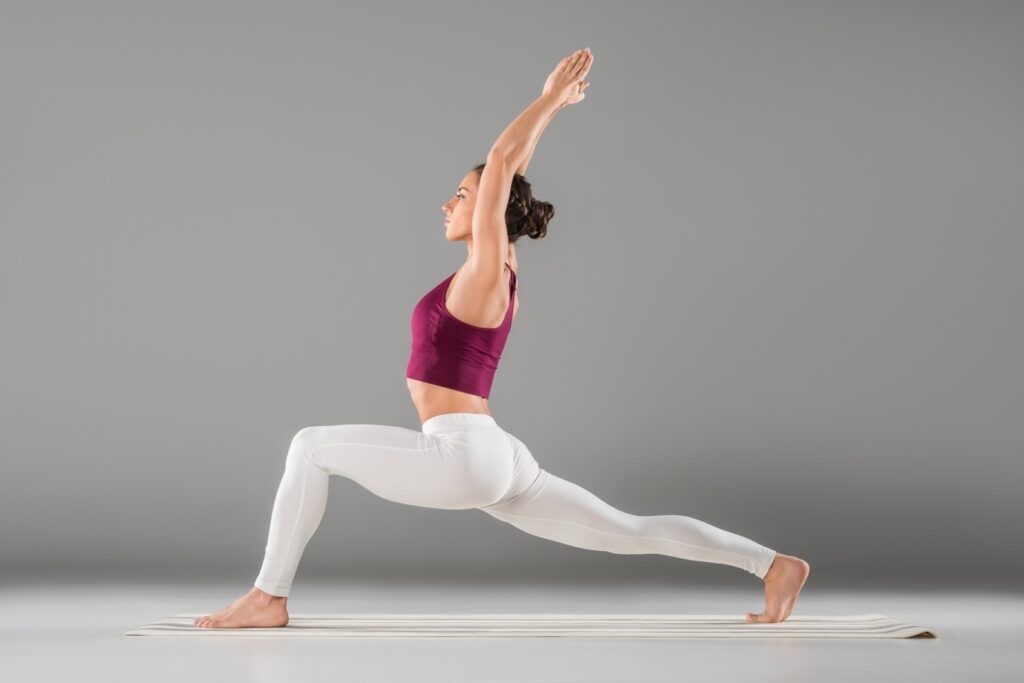
Interesting to note both Chinese Medicine and Ayurveda offer not only medicinal treatments but focus very much on people “exercising” to maintain their own wellbeing and also manage health.
Both Chinese Medicine and Ayurveda provide practices via Qigong, Tai Chi and the whole family of Yoga, the respective “health exercises” you can practice but in fact, far more is involved, an awakening of the mind, an understanding of our connection to everything in the universe.
Both Qigong and Yoga are forms of mind-body exercise form that use meditation, breathing, and movement to increase intake of the life force energy “qi” and “prana” and enable the body to heal itself.
What a healthy mind in a healthy body really means.
One of the terms formerly used for the techniques of Qigong was “Yangsheng”, which means “nourishing life”. The current Qigong has the following meaning: Qi being loosely translated as energy but more specifically it can be divided into two categories:
Non-Renewable: The life force energy we were born with, known as prenatal or original Qi we inherited from our parents.
Renewable: The life force energy we extract from the food we eat, the air we breathe, our connection with nature, prayer, meditation or mindful exercise.
Gong means effort or discipline, so it is Qigong practice which will enable you to feel Qi and initiate the healing process.
Practices like qigong, tai chi, yoga and the like are not just “health exercises” however. Of course they are, but above all they are spiritual practices. Standard yoga or qigong sessions consist principally of physical exercises and true to say, the awakening of our mind is perfected and completed by a physical process. Walking in public gardens with my parents was the first time I saw people practicing Tai Chi or possibly qigong, I did not know the difference at the time;) It appeared to be a very peaceful, co-ordinated dance like sequence. Similarly yoga movements display a sense of art and beauty. Many of the poses or movements in both yoga and qigong and tai chi chuan are inspired by nature: trees, mountains and animals.
Centring is an important component. It dissolves attachment to the chaos around us and enables us to focus. If we are not centred, especially as has been the case for many of us in these last years, we experience anxiety and fear, may feel lost or out of touch with ourselves which in turn makes us more vulnerable to infection.
Centring can be achieved by slowing down our breathing or “pranayama”, this enables us to bring calm to our emotions and take a distance from the events around us. By slowing down our breathing we automatically “feel” more of what is going on around us. Centred individuals are calm and peaceful in nature.
Sometimes the words centring, grounding or earthing are used interchangeably. Grounding or earthing is a topic of its own although the results are similar to those obtained by qigong. It refers to establishing a calmness with the energy fields around us. We absorb natural electrons from the Earth’s surface and detox excessive energy in the body which could otherwise produce free radicals. The Earth’s electrons act as antioxidants protecting us from disease. Grounding enables us to feel confident, content and positive.
In the process we also slow down our emotions and become more in touch with our environment. Being grounded means that we’re more mindful with respect to our environment. We appreciate the soil, the nature, the vegetation and trees which bear fruits and give us oxygen. Oxygen is our breath which is linked to the soul: atma (sanskrit) = the soul, atmen (German)= to breathe, then душа(Russian) = the soul, дышать(Russian) = to breathe, or to make it more clear with a Latin script example: dusza (Polish) = soul, oddychać (Polish)= to breathe. Bulgarian, душа, дишам; and Serbo-Croatian, duša, disati also share this pattern, so to conclude, the Slavic languages have preserved this link between breath and soul.
“Only when every component of the body is in its perfect place can we truly let go and become ourselves again. This is the reason why every spiritual practice in the long run always needs physical exercises to be successful. So, if you want to be wise, happy and content in the long term, you have to create a vessel out of your body that can absorb and, most importantly, retain these qualities.”
“We may change our body so that qualities such as joy, peace, love, courage and goodness can work through it.”
Dr Christopher Po Minar, Vienna, Austria.
Both Qigong and Yoga are low-impact forms of exercise which means they demand no great level of fitness. The asanas in yoga are physical body positions with the word asana meaning place, position or seat. In Sanskrit most of the movements end with the word asana, for example, the classic lotus pose is named Padmasana, the tree pose Vrikshasana and the mountain pose Tadasana. As you see, most asana names have evolved from the shapes and movements of animals or other elements in the natural world.
All asanas or poses follow the basic principles of alignment and muscular engagement ranging from twists to balancing poses. An asana can be performed as a static position held for several breaths or can be a dynamic flowing movement lasting for just one inhale or exhale. The original asanas were simple seated poses, steady and comfortable positions for yogis performing meditation. Non-seated asanas first appeared in the 17th century.
Both Qigong and Yoga differ from your regular workout as they extend to exploring the mind-body connection. Connection between mind and body is understood to be the key to healing. The fitness studio provides endurance and stamina, builds your muscle mass by quick repetitions of movement but there is no aspect of balance, coordination, concentration or breathing. Yoga develops balance, coordination and concentration through a controlled movement sequence. The traditional goals are to prevent disease, create a healthy body by controlled movement which in turn calm and focus the mind, resulting in us becoming more compassionate to ourselves and those around us.
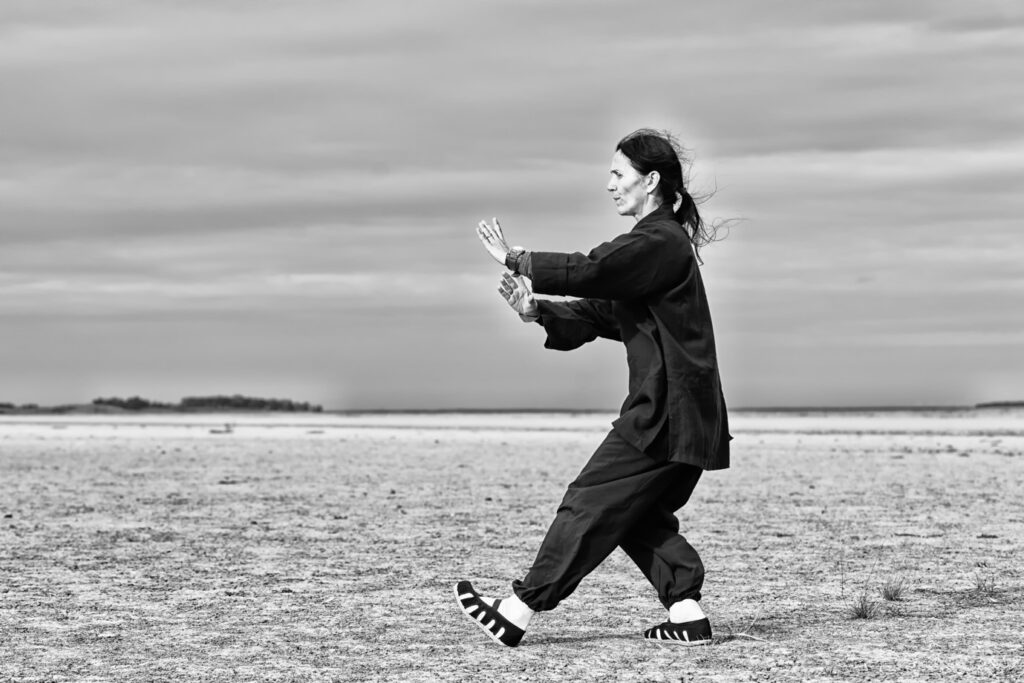
Most meaningfully the similarity between Qigong and Asana Yoga is
- Yoga postures are used to control, purify and cultivate prana, the life force energy that flows through the nadis or energy channels of the body.
- Qigong postures are used to control, purify and cultivate qi, the life force energy that flows through the meridians or energy channels of the body.
Also
- Asanas were not intended to be a standalone practice. Instead, they were meant to complement the other practices of ayurveda, the eight limbs of yoga.
- Qigong is also not intended as standalone practice. It complements other areas of Chinese Medicine, the five components of Chinese Medicine.